Soft-main hybrid
↓ Mains: natural gut / multi
↔ Crosses: polyester
Explore feel, elasticity, and easier depth.
Choose mains, crosses, materials, and split reference tension together. Build a setup you can explain, reproduce, and learn from.
A hybrid uses different strings in the mains and crosses; orientation matters. Neither direction must universally be tighter. Wilson publishes a broad 46–56 lbs (21–25.5 kg) hybrid starting range and advises polyester about 2 lbs (1 kg) below nylon. That is manufacturer guidance, not a law for every pairing. Choose with material stiffness, gauge, friction, frame, player preference, and product instructions in mind. Record mains and crosses separately, including both machine reference settings. Reversing the strings creates a new string job, not an equivalent arrangement. Establish a fresh baseline and track the complete assembled stringbed over time, alongside playing hours, wear, and feel.
A hybrid stringbed uses a different string in the mains and crosses. Mains run vertically along the racquet’s length; crosses run horizontally across its width when the handle points down. “Gut/poly” is incomplete shorthand unless you also say which material goes where.
The difference can be material, model, gauge, shape, or construction. Two different polyester strings can form a hybrid. Using the same string and gauge throughout at two reference tensions is a split-tension full bed; a tension difference by itself does not identify two different strings. Babolat’s hybrid overview describes varying materials, gauges, tensions, and direction as separate choices.
Reversing a pair changes the arrangement of the whole playing surface. Babolat’s RPM Blast / Touch VS guidance places RPM Blast in the mains for its spin-oriented role and gut in the crosses for feel, while offering gut mains for additional power and comfort. Those are the manufacturer’s priorities for that pair, not a measured percentage of influence.
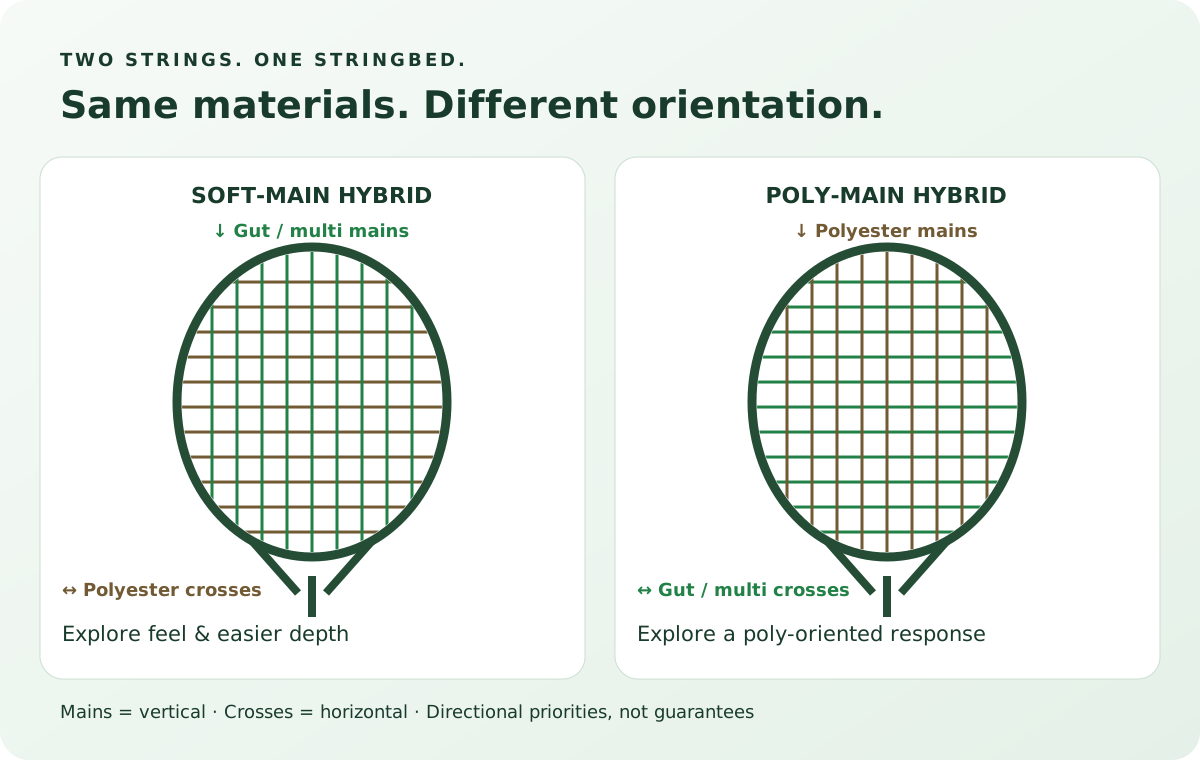
↓ Mains: natural gut / multi
↔ Crosses: polyester
Explore feel, elasticity, and easier depth.
↓ Mains: polyester
↔ Crosses: natural gut / multi
Explore a poly-oriented response with a softer second material.
Start your conversation with a poly main if retaining that string’s character is the reason you are hybridizing. A gut, multifilament, or synthetic-gut cross is then a different second material to evaluate. They are not interchangeable soft crosses: record the exact product so you know what produced the result.
Consider the more elastic string in the mains when easier depth or feel is your priority. Babolat’s product example above directly supports that choice for Touch VS. Extending the idea to multifilament is a testing direction, informed by its construction guidance, rather than a promise that multi behaves like gut. Adding a polyester cross changes the interface and the response you must assess.
A different cross model or gauge gives you another variable to investigate: shape, stiffness, friction, or feel. It also creates another detail to reproduce. Do not assume that mixing two polys makes the bed softer or superior to one poly throughout. Write down why the second string is worth trying before you order it.
This is our practical comparison framework, not a ranking. Each row names a direction to test and a question to carry into your next string job.
| Setup | Reason to try it | What to watch | Tension note |
|---|---|---|---|
| Gut mains / poly crosses | Explore gut’s elasticity and feel with a poly interface. | Cost, wear, and whether the poly’s aging changes the response you liked. | Confirm product guidance; no universal gut/poly split. |
| Poly mains / gut crosses | Keep a poly-oriented main and test gut as the second material. | Gut wear at intersections and changing feel. | Do not treat Wilson’s nylon example as an instruction for every gut product. |
| Poly mains / multifilament crosses | Test a less firm response than your full-poly setup. | Multi fraying, notching, and whether response stays consistent. | Check the multi’s composition and instructions before applying nylon/poly guidance. |
| Multifilament mains / poly crosses | Explore a softer main with a different cross interface. | Main wear and changes in launch or depth. | A separate setup from the reverse orientation; start a new record. |
| Poly mains / synthetic-gut crosses | Try a nylon partner; compare actual installed cost with a gut hybrid. | Wear, retention, and whether any saving survives more frequent restringing. | Wilson’s nylon/poly guidance directly addresses this material pair. |
| Poly mains / different poly crosses | Investigate a second model, shape, or gauge. | The setup can remain firm; compare both strings’ wear. | A soft-string differential does not automatically apply. |
Basis: Babolat’s material guidance and orientation example; TWU’s interface and fraying observations; ITF gauge and abrasion context. The test priorities and cost questions are String Tension AI’s synthesis, not results of a six-way comparative trial.
Use the racquet maker’s range first, then product-specific string instructions, broad material guidance, and your own setup history. If those conflict, resolve the conflict with your stringer before selecting two settings. A generic hybrid band is not permission to override the frame or either string’s instructions.
Wilson’s broad hybrid band is 46–56 lbs (21–25.5 kg). It divides that into 46–51 lbs for power and 52–56 lbs for control. These are manufacturer starting categories, not a requirement to use the midpoint or put every possible component inside one generic band.
Use the Tennis String Tension Calculator to turn your frame range and hybrid construction into a starting test window. It does not design the pair for you. The construction tension chart is the broader reference when comparing string families.
They can, but they do not have to. Equal reference tension is a legitimate choice where the equipment instructions permit it. Split tension is another setup variable. Decide whether you are testing a different overall setting or a different relationship between the two directions; write that intention down.
Wilson advises polyester 2 lbs (1 kg) lower than nylon, giving poly at 51 lbs (23 kg) and nylon at 53 lbs (24 kg) as its example. This follows the material, not the direction. It is not an instruction that every gut, multi, or poly/poly hybrid needs that differential. Read Wilson’s explanation.
Do not make “poly lower” an unconditional rule. A nylon/poly example cannot settle every product combination, and a poly/poly hybrid has no nylon component to which that example applies. Check what each maker recommends for the actual strings. An unusual reported setup does not overturn those instructions for your racquet.
Luxilon’s Natural Gut instructions explicitly say the appropriate higher or lower tension depends on the monofilament paired with it. That is a first-party reason to look up the combination instead of extending a generic split to every gut hybrid.
No universal rule says crosses must be lower—or tighter. Orientation identifies which strings occupy each direction; it does not select their machine settings. Reversing a pair is a reason to reconsider the whole setup, not to keep a fixed “crosses minus two” formula.
Two strings rub against each other at their intersections. Static friction resists the start of sliding; sliding friction acts during movement. Tennis Warehouse University’s retailer-operated laboratory studied them separately, which matters when interpreting a claim about a “slippery hybrid.”
In TWU’s static-friction experiment, the tested gut-main/poly-cross hybrids had exceptionally low friction; reversing the materials produced much higher values. The table reports tests at roughly 13 lbs of normal force per intersection. That contact force is part of the test apparatus, not a recommended stringing tension.
The sliding-friction experiment was more nuanced: gut mains appeared in slippery combinations with both nylon and polyester crosses. Its moving-string measurements do not establish one universal material order. Low resistance can help movement, but a useful snapback contribution also depends on timing while the ball is in contact.
HEAD describes round strings as less abrasive against another string in a hybrid. That makes cross-string surface a useful question when a softer partner is wearing quickly. Treat shape as one consideration; it does not tell you the friction or useful life of every finished pairing.
HEAD’s edged/shaped-string description also warns that these profiles can be rougher on the other string in a hybrid. Inspect a gut or multifilament partner at the intersections rather than assuming a spin-oriented shape is automatically the right cross.
The ITF technical document connects movement at intersections with abrasion and describes thinner gauges as more flexible but less durable. Record gauge alongside shape: changing both at once makes it difficult to tell which change helped. To check the published material, shape and millimetre gauge of each string before you pair them, look both up in our tennis string database, which lists manufacturer specifications with their sources.
TWU’s spin-potential tool compares laboratory string properties. It is not a prediction of your next shot. Manufacturer spin positioning, inter-string movement, and a reference-tension change are different claims. For the tension-specific evidence and its limits, see our spin guide; for firmer-response decisions, see the control guide.
These are dated reported professional setups, not recommendations. Tour players change strings and tensions with conditions, equipment, and personal preferences.
| Player | Mains | Crosses | Reference settings | Orientation & evidence |
|---|---|---|---|---|
| Alexander Zverev | Head Hawk Touch 1.25 mm | Babolat VS Touch 1.3 mm | Main: 52.9 lbs (24 kg)Cross: 55.1 lbs (25 kg) | Poly mains / Gut crosses Reported · Catalog verified Source contextThe current report supports the two models, gauges, and 24/25 kg settings. Racket Fit: corroborating report · Accessed 2026-09-07 Catalog provenance: Racket Fit · Accessed 2026-07-16 |
| Novak Djokovic | Babolat VS Touch 1.3 mm | Luxilon ALU Power Rough 1.25 mm | Main: 59.1 lbs (26.8 kg)Cross: 56.0 lbs (25.4 kg) | Gut mains / Poly crosses Reported · Catalog verified Source contextThe supplementary report lists the same models and gauges at approximately 59/56 lbs. The catalog’s original Racket Fit link now reports a different tension snapshot. Thyroff Racket Stringing: corroborating report · Accessed 2026-09-07 Catalog provenance: TennisCompanion · Accessed 2026-09-07 Catalog provenance: Racket Fit · Accessed 2026-09-07 Catalog provenance: Tennisnerd · Accessed 2026-09-07 Catalog provenance: ProStrung · Accessed 2026-09-07 Catalog provenance: Baseline Lab · Accessed 2026-09-07 Catalog provenance: HEAD · Accessed 2026-09-07 Catalog provenance: Courtside Tennis · Accessed 2026-09-07 Catalog provenance: Courtside Tennis · Accessed 2026-09-07 |
| Casper Ruud | Yonex POLYTOUR SPIN 1.25 mm | Yonex POLYTOUR PRO 1.3 mm | Main: 54.0 lbs (24.5 kg)Cross: 54.0 lbs (24.5 kg) | Poly mains / Poly crosses Reported · Catalog verified Source contextThe supplementary report supports the two models and equal 24.5 kg settings. The 1.25/1.30 mm gauges follow Yonex’s athlete kit, checked October 3, 2026, which lists both strings without assigning mains and crosses. The original Too Many Rackets link now lists a different main model. TennisCompanion: corroborating report · Accessed 2026-09-07 Catalog provenance: Yonex · Accessed 2026-10-03 Catalog provenance: Too Many Rackets · Accessed 2026-10-06 Catalog provenance: Dad Racket · Accessed 2026-10-06 Catalog provenance: Tennisnerd · Accessed 2026-10-06 |
| Naomi Osaka | Yonex POLYTOUR STRIKE 1.25 mm | Babolat VS Touch 1.25 mm | Main: 59.1 lbs (26.8 kg)Cross: 56.0 lbs (25.4 kg) | Poly mains / Gut crosses Reported · Catalog verified Source contextThe report lists the same models and gauges at 59/56 lbs; conversion from the catalog’s rounded kg values produces the decimals shown here. ProStrung: corroborating report · Accessed 2026-09-07 Catalog provenance: ProStrung · Accessed 2026-07-16 |
Values and verification dates come from the existing public catalog, not a new tour verification. Sources were reviewed on September 7, 2026; the expandable notes distinguish corroboration from older provenance. Converted lbs are rounded to one decimal, not extra measurement precision. No rankings, endorsements, or performance reasons are inferred.
Zverev’s reported crosses are higher; Djokovic’s and Osaka’s mains are higher; Ruud’s settings are equal. The soft component is higher in some examples and the poly component in another. These reports illustrate variation, not the causal reason a player chose a split.
Explore all sourced pro setups for the complete catalog and each record’s provenance.
The two components need not lose tension or wear at the same rate. Look at both directions for notching, fraying, or damage, and note whether movement or feel has changed. Our playing-hours guide explains why the first component to leave your acceptable physical or performance range can set the endpoint.
Do not average gut and polyester tension-loss claims to predict a hybrid. The assembled strings are mechanically coupled. Track the complete racquet against its own baseline instead. The poly vs. gut comparison separates material-level laboratory findings from a mixed stringbed’s measured retention.
Calendar age and playing exposure provide different context. Read why tension changes over time, then use the restring decision guide to combine measurements, physical condition, and repeated performance changes. A hybrid label does not supply a guaranteed playing-hour lifespan.
This is String Tension AI’s documentation method, not a laboratory protocol or a universal recommendation. Its purpose is to let your next string job answer a specific question. “I want easier depth without losing confidence on a full swing” is a more useful goal than “I want a better hybrid.”
For example, testing only the cross reference setting keeps both products, gauges, and orientation fixed. Reversing the strings while also changing gauge and both tensions creates a different setup, but it will not tell you which individual choice changed the response.
Our general fine-tuning heuristic elsewhere is a small 2 lb (approximately 0.9 kg) adjustment. It is not Wilson’s material differential and does not require moving both directions. Choose a permitted change with your stringer and keep the question narrow enough to learn from.
Use the measurement guide for a consistent capture routine. Repeat a surprising reading before making an equipment decision; pair the trend with what you actually felt on court.
Print this page or copy these fields into your notes. No account or online storage is needed for this worksheet.
Brand & model: __________________
Material & gauge: _________________
Reference tension & unit: ___________
Brand & model: __________________
Material & gauge: _________________
Reference tension & unit: ___________
Handing the racquet over? Fill in the card below for the string job itself. Our guide on how to talk to your stringer covers what to ask for and what to keep from the receipt.
Fill in what you want strung, then print the card or show it on your phone. Nothing you type here is saved, sent, or added to a link.
Reference tensions are the settings you ask the stringer to use. They are not a measurement of the finished stringbed, so measure the racquet fresh after stringing to set your own baseline.
Keep mains, crosses, gauges, reference settings, playing hours, and a fresh baseline together in your racquet history.
Track My Hybrid SetupA hybrid is difficult to reconstruct from memory: two models, two gauges, two reference settings, and an orientation can distinguish one job from another. Saving that record gives the next experiment a clear starting point.
String Tension AI supports hybrid and two-sided setups, racquet-linked string jobs, modeled stringbed readings, and playing-session logs. PRO adds full measurement history, completed string-job comparisons, and string and hybrid recommendations. The app feature guide explains the available tools and tier limits.
Use a new baseline for each job, then compare its subsequent readings with that baseline. A more repeatable capture is helpful for tracking; it does not independently establish absolute accuracy or reveal each component’s tension. Keep your requested settings and your later readings as separate facts.
Product scope checked against the current App Store listing and product feature guide on September 7, 2026. Equipment feel is not a medical outcome; persistent pain is a reason to stop and seek qualified advice.
These answers use the manufacturer, technical, and laboratory sources discussed above. Setup-testing advice is our synthesis; it does not replace your equipment instructions.
Start with your racquet’s range and the instructions for both strings. Wilson’s broad hybrid starting band is 46–56 lbs; it does not resolve every product pairing or select two settings for you. Use the linked calculator for a starting window and confirm the main/cross split with your stringer.
They can. Equal reference settings and split settings are both setup choices. Record each direction explicitly so that the next string job can reproduce the test.
There is no universal requirement. Start with the materials, frame, and product instructions, then decide what response you want to test. The label “cross” does not prescribe a higher machine setting.
No universal rule requires lower crosses either. A material-based recommendation follows that material when you reverse orientation; it is not a formula tied to horizontal strings.
No. Wilson’s specific published differential concerns polyester versus nylon. Do not automatically extend it to every gut, multifilament, or poly/poly pairing. Product-specific instructions take priority.
Consider polyester mains when preserving more of a polyester-oriented response is the goal; consider a more elastic main, such as natural gut or multifilament, when exploring feel, comfort, or easier depth. Babolat’s RPM Blast / Touch VS example illustrates both orientations; neither is universally better.
Either is possible. Babolat positions Touch VS crosses for feel in its RPM Blast hybrid and describes gut mains as an option for additional power and comfort. That is product guidance, not a promise for every gut/poly combination.
Identify the exact multifilament construction and both makers’ instructions first. Discuss whether their nylon/poly guidance applies, then record a separate reference setting for each side. “Multifilament” alone is not enough to prescribe a split.
Treat this as a new setup rather than inheriting the settings from the reverse orientation. Confirm frame and product limits, choose the response to test, and establish a new baseline after installation.
Choose two settings within the frame and product guidance. There is no single gut/poly differential established by the sources here. Keep the models and gauges fixed when comparing a split change.
Confirm the instructions for that exact pair with your stringer. Do not simply swap the numbers from a gut-main setup or assume that gut crosses must be lower. Record the completed combination as its own job.
It is not a universal main/cross rule. Wilson says polyester should be 2 lbs (1 kg) looser than nylon. Separately, String Tension AI uses 2 lb (approximately 0.9 kg) as a general small-change testing heuristic; the two ideas have different purposes.
Yes, where the racquet and string instructions permit it. Equal machine settings do not make two different materials behave identically, but they give you a clearly recorded setup to compare.
A hybrid label alone cannot tell you. Compare the assembled racquet with its own fresh baseline. Averaging two material tension-loss claims does not predict the combined stringbed’s retention.
A softer main is one direction to test for a less firm feel, but the entire pairing, frame, gauge, and settings matter. The comparison table describes reasons to experiment, not a comfort ranking or medical benefit.
Not automatically. Laboratory friction results describe tested interfaces, and snapback depends on string movement during impact. They do not guarantee extra on-court spin from a hybrid label or one tension split.
Yes. Different poly models, gauges, shapes, or constructions can form a hybrid even though both strings belong to the same material family. A poly/poly setup is not inherently better or softer than a full bed.
Combine visible wear, repeated changes in feel or control, playing hours, and the trend from your baseline. Replace a broken or no-longer-acceptable setup rather than waiting for both components to reach the same endpoint.
String Tension AI supports hybrid records and modeled estimates of the installed stringbed. Use repeatable readings to track the complete racquet. A reading is not a separate measurement of each direction or the arithmetic mean of the two machine settings.
No. Reported pro setups provide context, not a prescription for your racquet, technique, conditions, or restring schedule. Use your own equipment guidance and a documented test.
Technical and product source pages were accessed September 7, 2026. Access dates indicate this review, not a new experiment or a change to the original publication date. See our editorial standards.
ITF: Rackets and Strings — Strings (November 2019). Elasticity, gauge, spacing, stiffness, and stringbed behavior. These are general physical considerations, not a main/cross prescription.
Tennis Warehouse University: Static Friction and Spin (2010, revised 2011), Sliding Friction and Spin (2010), and the Spin Potential tool. Interpret their tested strings, apparatus, and metrics within those limits.
The pro string catalog and evidence sidecar preserve reported records and provenance. They are not performance tests. Our contribution here is the comparison framework: record both reference settings, change one variable, establish a new baseline, and compare complete jobs. We did not conduct a new hybrid laboratory trial for this article.
For your next step, use the Resources library to move from setup choice to measurement and restring decisions.
Measure the stringbed, save each string job, and learn which combinations work for your game.
Track My Hybrid Setup